A Forager's Home

Grow. Find. Eat. Make.

  • Blog
  • About
  • DIY
  • Recipes
  • Foraging
foragingforasparagus2016.jpg

Foraging for Asparagus

June 17, 2016 by Kelsey Fast in Find

Since moving to Kamloops I have been aware of the fact that asparagus grows wild in the ditches, but for two and a half years I hadn't been able to find any!  I have a friend who decorates her house in the fall with the full grown plants when they dry out to a brilliant gold, so I finally asked her this year where she finds them.  People are typically very secretive about their foraging finds, but thankfully she took me on a walk and taught me all about foraging for wild asparagus.

When we found the first spear I wasn't surprised that I hadn't been able to find any before.  First it helps to have an eye for what the old dead plants from the previous season look like.  If you look at the photo below there is a good example of what to look for.  One plant is dead and the others beside it are fully grown.  This plant has been dead for a while I think since in the fall they usually look more beautiful than that with all their frilly foliage and bright red berries.  When you find the dead old ones - and here you have to be a bit discerning since there are a few other things that look similar after the winter (looking at you, wild mustard) - look around the base in a radius of about a foot.  If you've identified it correctly as asparagus and it is the right time of year you should see some tiny asparagus spears. 

foragingforasparagus2016-02.jpg

In most places right now the asparagus will be gone to seed like the photo above, but you might be able to still find some.  Where I go there were still a few new spears poking up beside the larger, older plants.  If I had been more consistent going back to collect it last month there would still be more to be had, but one person can only accomplish so much!

foragingforasparagus2016-03.jpg

Even though these grow in the wild they look almost identical to the asparagus you would find in a store or market since they are actually the same thing!  Apparently someone's garden asparagus went feral once upon a time, and now it has naturalized in the landscape.  I feel really lucky since we are renting our home and I have a very limited growing space for my garden (see previous posts) and when something like this grows naturally around me it is almost like my garden is extended!  Cook them exactly the same way as you would any store bought asparagus.  My favourite ways include: roasting them wrapped in bacon, pureeing them into soup, pickling them, or chopping them up to eat with eggs.

Wild asparagus has the most amazing taste.  I imagine if you grow it in your garden and have it fresh you might have the same experience.  It tastes so fresh and sweet, not unlike peas.  I think the taste is also heightened by the sense of victory you get from going outside and finding your own food.  I used to think I didn't like asparagus but that is likely because I always had the type that languished too long on the store's shelf due to its high price tag.  This is something altogether different and beautiful.

foragingforasparagus2016-04.jpg

If you don't eat them right away store your spears in jars with a little bit of water in the bottom and keep them in the fridge.  They will actually keep for quite a while like this, but it tastes so good you probably won't have to worry about that! You'll eat it all long before it goes bad!  Asparagus also can be frozen, but you will want to blanch it first to destroy the enzymes that will cause it to break down during storage.

June 17, 2016 /Kelsey Fast
foraging, asparagus, spring
Find
1 Comment
freshstrawberrypie.jpg

Bake Some Pies with Fannie Farmer - Fresh Strawberry Pie

June 12, 2016 by Kelsey Fast in Eat

If you have been following my Instagram, you will know I have been planning to work on something here regarding the Fanny Farmer Baking Book.  Originally I thought I might do it Julie and Julia style and bake every recipe, but when I planned it all out I realized how ridiculous that looked.

Pretty much impossible!

Pretty much impossible!

freshstrawberrypie2016-03.jpg

The Fanny Farmer Baking Book has a lot of practical instruction for those who may just be beginning their foray into the world of baking.  I have done a fair amount of baking in my life, but it has been sporadic recipes and I don't feel that I have a handle on what really makes it work.  I am excited to work though this book and I have decided for now just to do the pie section.  It is still a daunting task!  There are over 100 recipes!  To do it in one year would mean a pace of at least two pies per week.  We'll see how I do.  There are lots of interesting crust recipes, and heritage pies from bygone days (Shaker Lemon, Shoofly, and Vinegar to name a few).  I have to say that I do already have a favourite basic pie crust recipe, so we'll have to see how these stack up.

freshstrawberrypie2016-04.jpg

The first recipe I chose to do was 'Fresh Strawberry Pie'.  This is not the same recipe as is printed on my cute pie plate, but I thought I had to use it since I was making strawberry pie!  I had planned to do the first recipe in the pie section first (Basic Master Recipe: American Apple Pie) since it is an overall basic pie recipe and includes most of the overall pie instructions, but apples are not at all in season right now, and strawberries are!

freshstrawberrypie2016-05.jpg

Look at these beauties!  Since moving from Surrey I have mourned the loss of being near to Driediger Farms for their strawberries and blueberries (they do grow other things but those were our favourites).  I am ever hopeful that my garden will be able to supply me with at least close to the amount of strawberries we eat as a family, but that seems destined to wait for at least another year.  Last year I managed to make some trips out to the berry farm while visiting family, but this year I wasn't quite sure how I was going to manage it.  Thankfully Davison Orchards in Vernon is not that far away.  We went last year several times for their apples and pumpkins, but I was glad to realize that they also do strawberries!  Beautiful strawberries!  We always love our visits there.  The produce is gorgeous, it is great for kids, the cafe has delicious food, and the bakery and gift shop are always worth a visit.

It rained a little bit on us, but there are many uses for a ring sling so Little Forager stayed nice and dry!

It rained a little bit on us, but there are many uses for a ring sling so Little Forager stayed nice and dry!

Anyway, regarding the pie crust, it was not much different from other recipes I have tried, but I did actually learn something that made it come together easily.  It was recommended to add the water a tablespoon at a time and stir it lightly with a fork.  You stop once there is enough moisture for the dough to come together.  I had to use a couple more tablespoons than the recipe called for, but I live in a really dry climate, so that wasn't surprising.  The result was a really workable, light, silky dough.  I'm going to try that method out with my old recipe and see if it makes it even better.  In other news, I really need to up my pie crust crimping game!

To make the filling half the berries were crushed and cooked with some cornstarch and sugar and the rest were stirred into that mixture fresh.  The berries go into the pre-baked crust.  After that whipped cream is spread over the top.

The end result - delicious.  One thing for me was that the pie was a bit too sweet.  The berries were such a beautiful quality that they didn't need much sugar to help them out.  The other thing was the filling didn't quite set up as much as I expected it to so when we cut the pieces they looked pretty sloppy.  I think after the leftovers have sat in the fridge for a few hours that will solve that issue.

June 12, 2016 /Kelsey Fast
Fannie Farmer, pie, baking, kitchen
Eat
Comment
mayharvest2016.jpg

May Harvest Totals

June 11, 2016 by Kelsey Fast in Grow

GARDEN AND FORAGING HARVEST TOTALS FOR MAY

  • Asparagus (wild): 4493 g
  • Beet Greens: 74 g
  • Buckwheat Sprouts: 150 g
  • Chamomile Flowers: 2 g
  • Chives: 1g
  • Dandelion Greens: 150 g
  • English Mint: 108 g
  • English Thyme: 2 g
  • Garlic Chives: 4 g
  • Green Garlic: 5 g
  • Haskap Berries: 1 g
  • Lemon Balm: 7 g
  • Marjoram: 14 g
  • Oregano: 2 g
  • Pea Shoots: 7 g
  • Radish Greens: 292 g
  • Rhubarb: 202 g
  • Rosemary: 11 g
  • Spring Onion: 15 g
  • Tarragon: 5 g
  • Thyme of Provence: 4 g
  • Vietnamese Coriander: 3 g

TOTAL: 5.552 kg

June 11, 2016 /Kelsey Fast
garden, harvest, spring
Grow
Comment
babyvoles2016.jpg

Finding Orphaned Baby Voles

June 09, 2016 by Kelsey Fast in Grow

We were working on a pretty big garden project (details to be shared later!) when suddenly we realized we had unknowingly disturbed a nest of voles.  Ok more than disturbed.  They must have been nesting in our compost but we only found them after it had all been shovelled over into the new location and even then not until the next day.

Today we were bringing bags of dirt down to the garden and Mr. Forager nearly dropped a huge bag right on one that had crawled out into the garden path.  We heard some more squeaking and discovered one more still hidden in the compost.  Neither of us knew what to do so we put them in a box with some straw and I've been feeding them milk from an eye dropper all day.  

I'm not really expecting them to last long, but I feel like I owe it to them to at least try to give them a chance.  We'll see what happens.  

Update (11/06/16): Both voles have passed away.  This was not really unexpected but it was still sad.  I hope they were more comfortable in their last days than if I had just left them.

June 09, 2016 /Kelsey Fast
garden, wildlife
Grow
Comment
potatotower2016.jpg

Using a Potato Tower in the Garden

June 06, 2016 by Kelsey Fast in Grow, Make

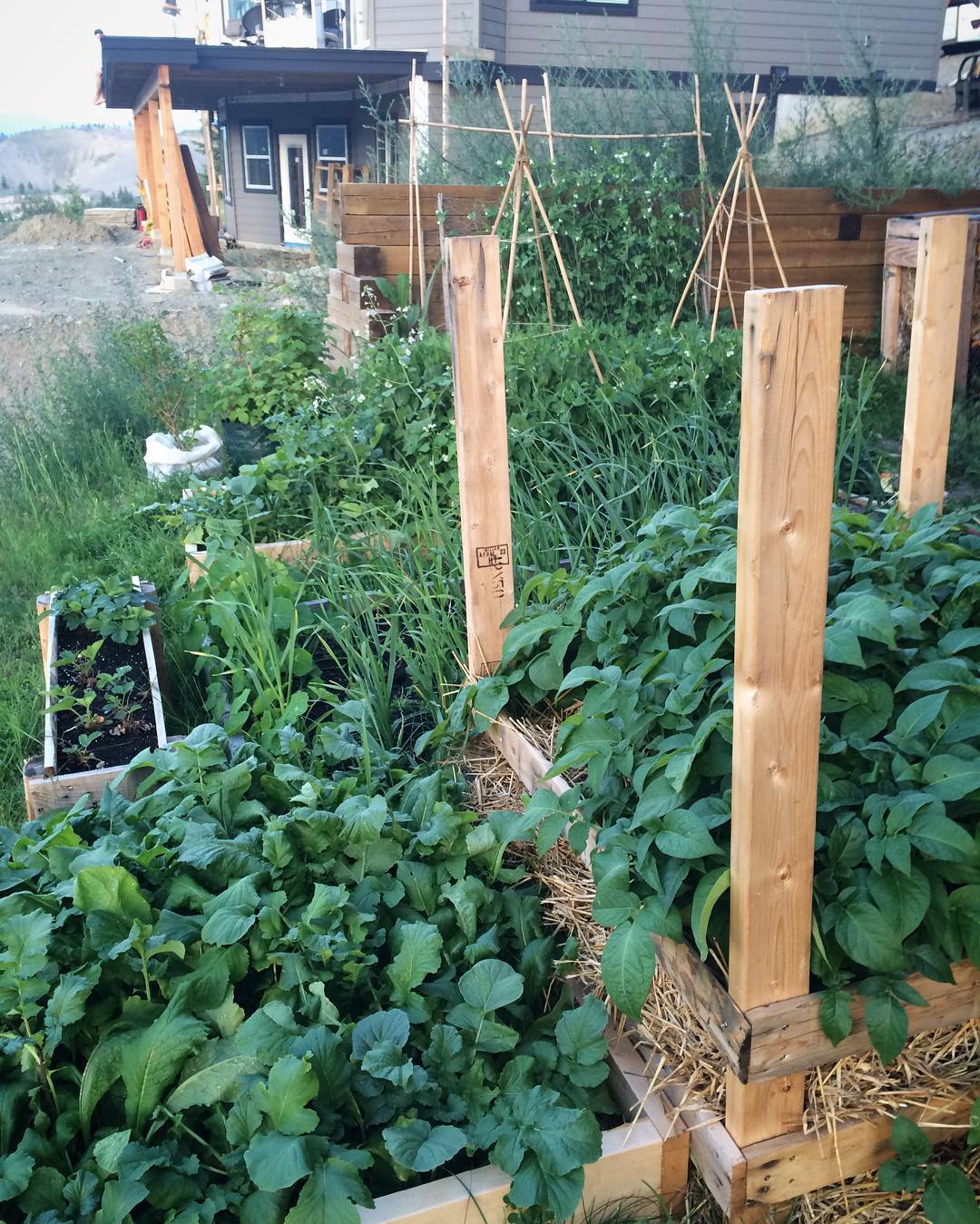
As you can see our garden is a bit challenged when it comes to space.  We are renters right now and we consider ourselves lucky to have the space that we have.  I could just go at gardening as more of a hobby, but I consider it a personal challenge to try to feed my family as much as possible from our tiny little plot.  One important step to this is encouraging vertical growth whenever possible.  This makes peas and beans no-brainers, but there are some other veggies in this category that might not be initially thought of. One of these is potatoes.

potatotower2016.jpg

This is our potato bin.  I wish I took a photo of it right at the beginning, but I wasn't thinking of writing a blog post about the project at that point so that got neglected.  Basically we used a couple pallets and Mr. Foraged and I worked together on an idea that might work.  

I've grown potatoes in grow bags before, and grown them in a raised bed with the more traditional method of 'hilling up'.  This potato tower method was sort of a combination of the two.  I was also influenced by some reading I did on other traditional ways people grew tomatoes - one of which was to grow them in straw.  This was the real key to keeping our idea cost effective!

What we ended up doing was screwing together a four by four square with four posts going up from each corner.  We then covered the ground inside it with newspaper to discourage weeds, and then covered that with a few inches of good manure and compost.  We planted our potatoes in that and then covered it with a good six inches of straw.  

potatotower2016-03.jpg

Then as the potatoes grew we kept adding slats and filling it up with more straw.  I made sure to keep a few inches of the potato leaves visible from under the straw to make sure the plants still had access to sunlight.

A major benefit to this method - aside from saving cost and space - that I can see is that the job of harvesting should be much easier!  I'm thinking we'll spread out a tarp and then unscrew the slats on one side and then just pull everything out.  The potatoes should be pretty clean from just growing in straw, and we won't accidentally poke any with a potato fork.  It will also make it really easy to get in to grab a few early baby potatoes!  Of course it remains to be seen if this even works for growing potatoes.  So far we have beautiful looking plants, but I don't know what is going on underneath right now.  We'll have to wait and see!  I will definitely update when it comes time to really put this method to the test!

June 06, 2016 /Kelsey Fast
Garden, raised beds, potato, small space garden, diy
Grow, Make
2 Comments
  • Newer
  • Older

Terms and Conditions | Privacy Policy | Shipping and Returns

Powered by Squarespace